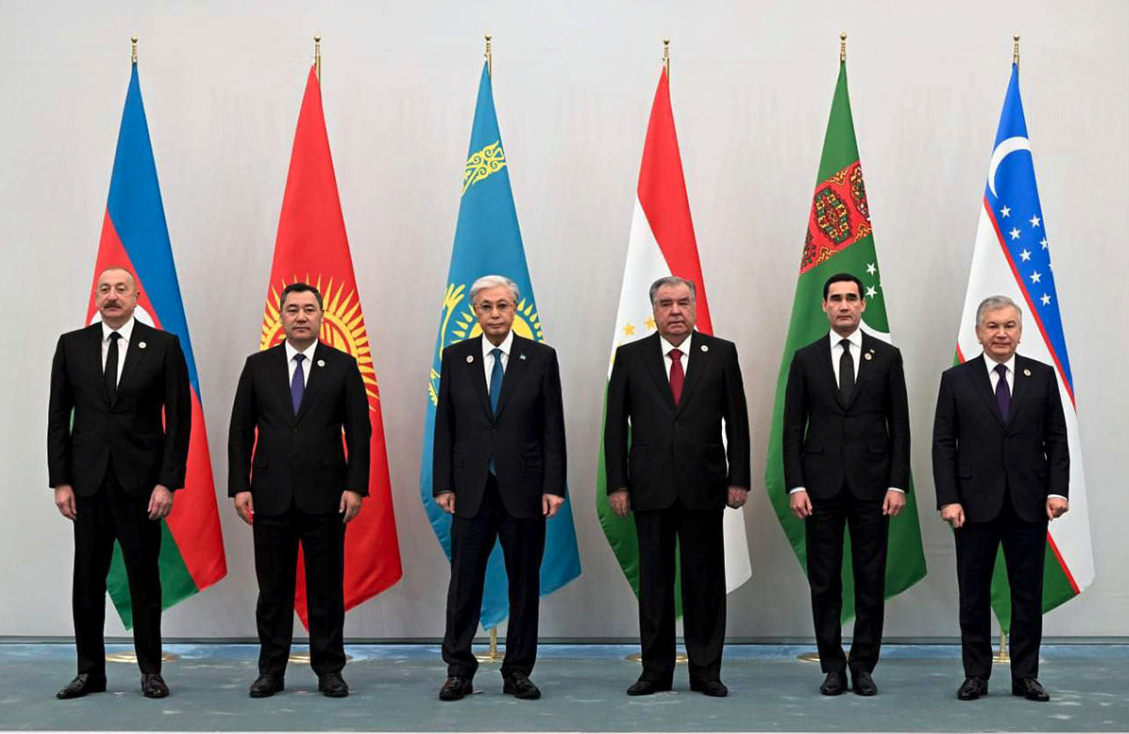
Last weekend, Central Asian leaders gathered in Tashkent, Uzbekistan for the seventh Consultative Meeting of heads of state, an annual summit dedicated to advancing regional political cooperation.
As in past years, the summit delivered several economic and diplomatic pledges, from launching a “Made in Central Asia” brand to jointly backing Kyrgyzstan’s run for a non-permanent UN Security Council seat, as well as setting a goal to boost interregional trade from $11 billion to $20 billion.
This year, however, in what Kazakh President Kassym-Jomart Tokayev labelled a “historic” development, Central Asian states also agreed to welcome Azerbaijan to the cooperational forum as a full member, having attended the previous two meetings in a guest capacity.
“The decision to add Azerbaijan to the group is indeed significant as it shows how CA is embracing the idea of moving from regionalism to transregionalism to broader Eurasia,” said Filippo Costa Buranelli, senior lecturer in International Relations at the University of St. Andrews. “The message underlying this decision is that Central Asia is done with solving its own internal issues.”
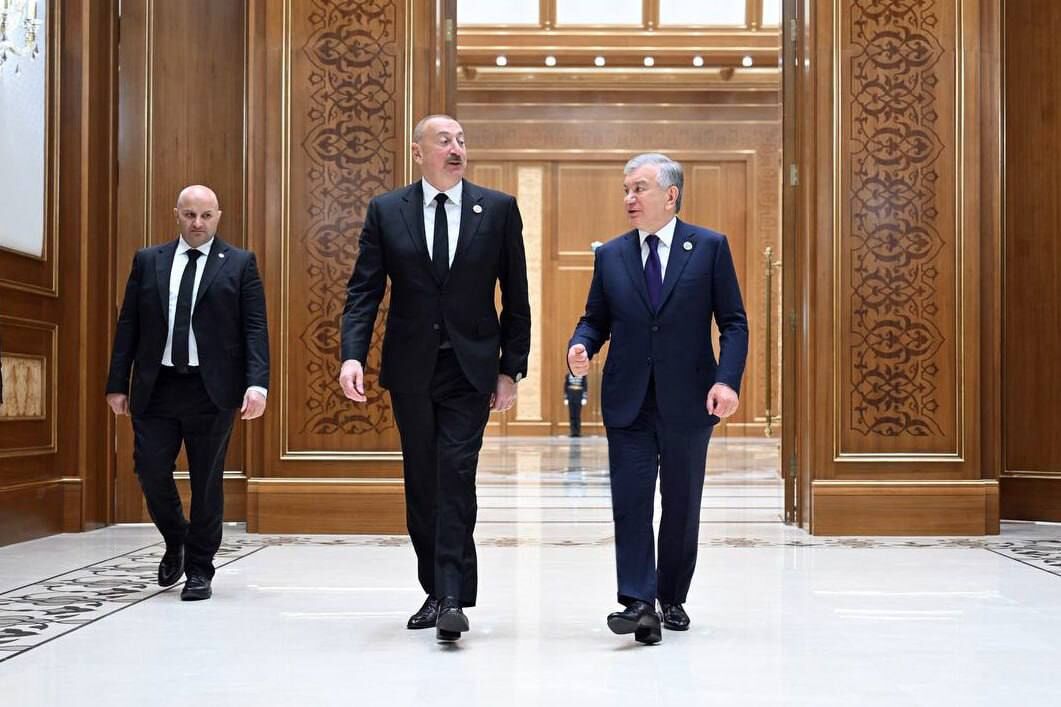
Photo: president.uz
The move was typical of the expansive tone set for the summit by the host, Uzbekistan’s President Shavkat Mirziyoyev, who made several other regionalization proposals, including the suggestion to create a “Community of Central Asia,” a more institutional format with a Council of Elders, increased coordination, and a rotating Secretariat.
“The consultative meeting format has been important for systematizing and stabilizing Central Asia as a coherent and cohesive region over the years. The proposed new structures would not amount to a regional organization, it would still be something semi-formal but more institutionalized and a little bit more predictable, especially in terms of making decisions more cohesive, coordinated, and better implemented,” Costa Buranelli told Vlast.
Institutionalization could be a tough pill to swallow for Turkmenistan, which has maintained a neutral stance in foreign policy since independence.
In fact, Uzbekistan’s efforts in bringing together Central Asian states, according to Bernardo Teles Fazendeiro, assistant professor of International Relations at the University of Coimbra, could potentially be at odds with the ultimate objectives of other countries in the region.
“Mirziyoyev claimed Uzbekistan’s leading role in pushing regionalism. But the other partners might not accept this role nicely,” Teles Fazendeiro told Vlast.
Costa Buranelli agreed: “This is just a proposal and it’s yet to be seen whether the other governments in the region would subscribe to it.”
The Uzbek Essay
Still, Mirziyoyev’s vision for the region, as expressed in a long essay entitled “Central Asia on the Threshold of a New Era” published a few days before Central Asian leaders gathered in Tashkent, is expansive.
Between the different countries of the region, for example, Mirziyoyev sees “a new regional identity for Central Asia gradually emerging,” based on a “common culture” and sense of “trust, mutual understanding, and a shared future”.
For Mirziyoyev, this is even more incentive to band together in the international arena “without external mediation,” in order to “more effectively attract investment and strengthen cooperation with other countries.”
“When Central Asia speaks to external partners as a single actor in international relations, its voice becomes louder and more confident,” he wrote.
According to Teles Fazendeiro, Mirziyoyev’s regionalizing style marks a significant change in leadership style from the rule of former President Islam Karimov, who preferred to engage with global powers without involving Central Asian partners.
“Mirziyoyev clearly states that seeing Central Asia as a whole is a way to make Central Asian states stronger when negotiating with other powers,” Teles Fazendeiro told Vlast.
If Mirziyoyev was “skeptical” of the benefits of regional cooperation when he took power in 2016, “now he’s confident,” Teles Fazendeiro said. “This is clearly not a Karimov style of approaching foreign policy.”
By emphasizing regional cooperation, Mirziyoyev is essentially saying that “Uzbekistan’s foreign policy
starts first in the region and then extends elsewhere,” according to Teles Fazendeiro.
Future Questions
Whether the other countries share Mirziyoyev’s vision will only become clearer with time, especially as the summit’s final documents and joint declaration were not made public, a departure from previous Consultative Meetings, after which at least the final declaration was published.
In any case, with the permanent addition of Azerbaijan into the Consultative Meeting format, Central Asia now appears to be creating institutional ties between itself and other parts of Eurasia, without the help of any neighboring superpower..
These new transnational and transregional links could be central to the region’s diplomatic path going forward, even if they do not guarantee permanent cohesion.
“I would envision its development more like a flexible institutionalization as opposed to a full-fledged regional organization,” Costa Buranelli said.
Поддержите журналистику, которой доверяют.