For Kazakhstan’s high school students, the Unified National Testing is the most important gateway to higher education. A one-point difference in the score could land you a spot at a top institution for free or relegate you to a worse university without financial support.
Undoubtedly, the UNT (ENT in its much feared Russian acronym) has put an enormous amount of pressure on Kazakhstan’s teenagers since it was established in 2004 as the key measure to determine university admissions and scholarships.
This year, the test was taken more than 381,000 times, according to the National Testing Center. One in every four test results was appealed, but only less than 2% of the 92,755 appeals were upheld.
Applicants, who can take the test multiple times each year, have immediate access to their results after the test. With the click of a button, within 30 minutes of finishing, they can request an appraisal of their results, with an appeals commission reviewing any disputed questions to ensure a consistent evaluation.

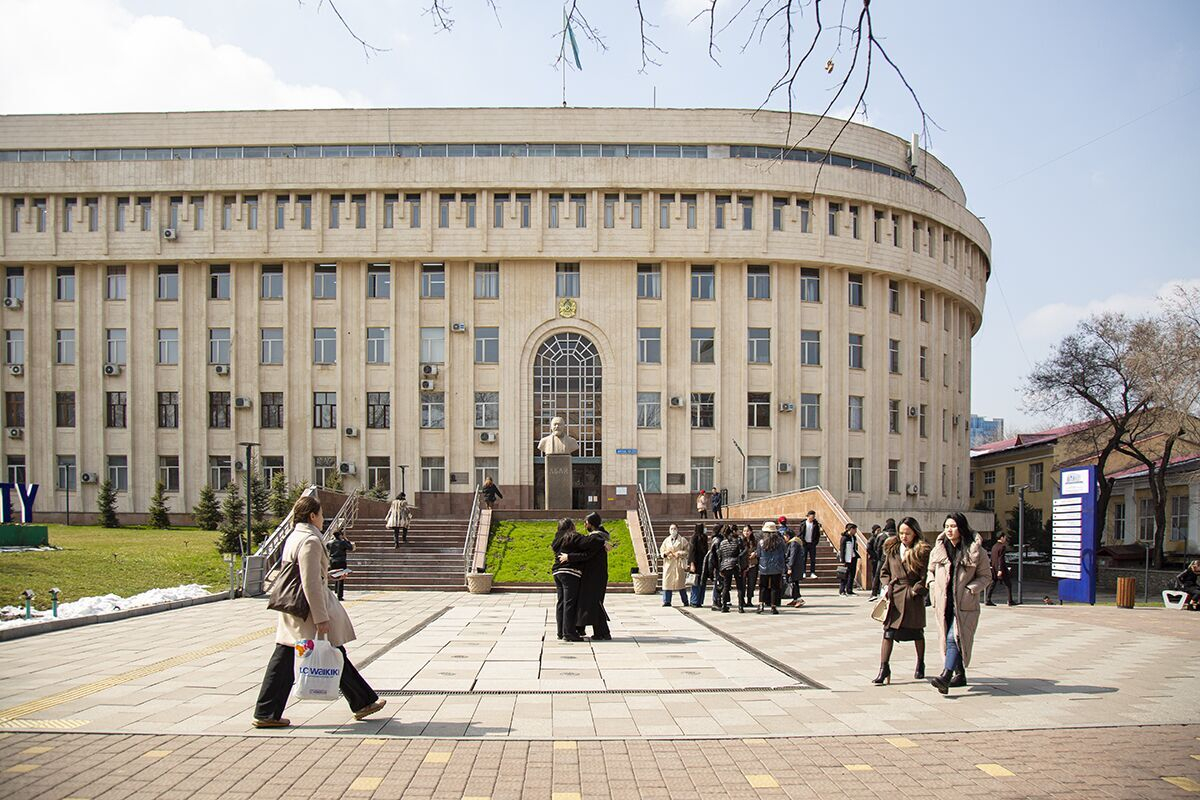
Photo: batys.info
Vlast spoke with Assemgul (name changed) in Astana, who appealed two questions. The NTC accepted her appeal about one of them, and her score was amended to reflect the extra point. The second question, however, appears to never have been considered by the appeals commission.
“They didn’t even give me the protocol containing the evidence of the appeal process. This must be provided by law. I wasn’t even informed for which specific question I had been awarded the point,” Assemgul told Vlast.
The NTC told Vlast that it had not denied Assemgul’s appeal.
“Regarding the second question, the Commission concluded that the structure of the relevant task had been correctly displayed. Representatives from the NTC later met with her and her family to clarify that Reading Literacy tasks assess not only comprehension but also the ability to interpret and apply information,” the NTC said.
The Commission also noted that all appeals are reviewed anonymously, an extra measure ensuring an objective and non-partial evaluation. In any case, Assemgul was not satisfied with its communication with her. “Overall, I think the process lacks transparency,” she said.
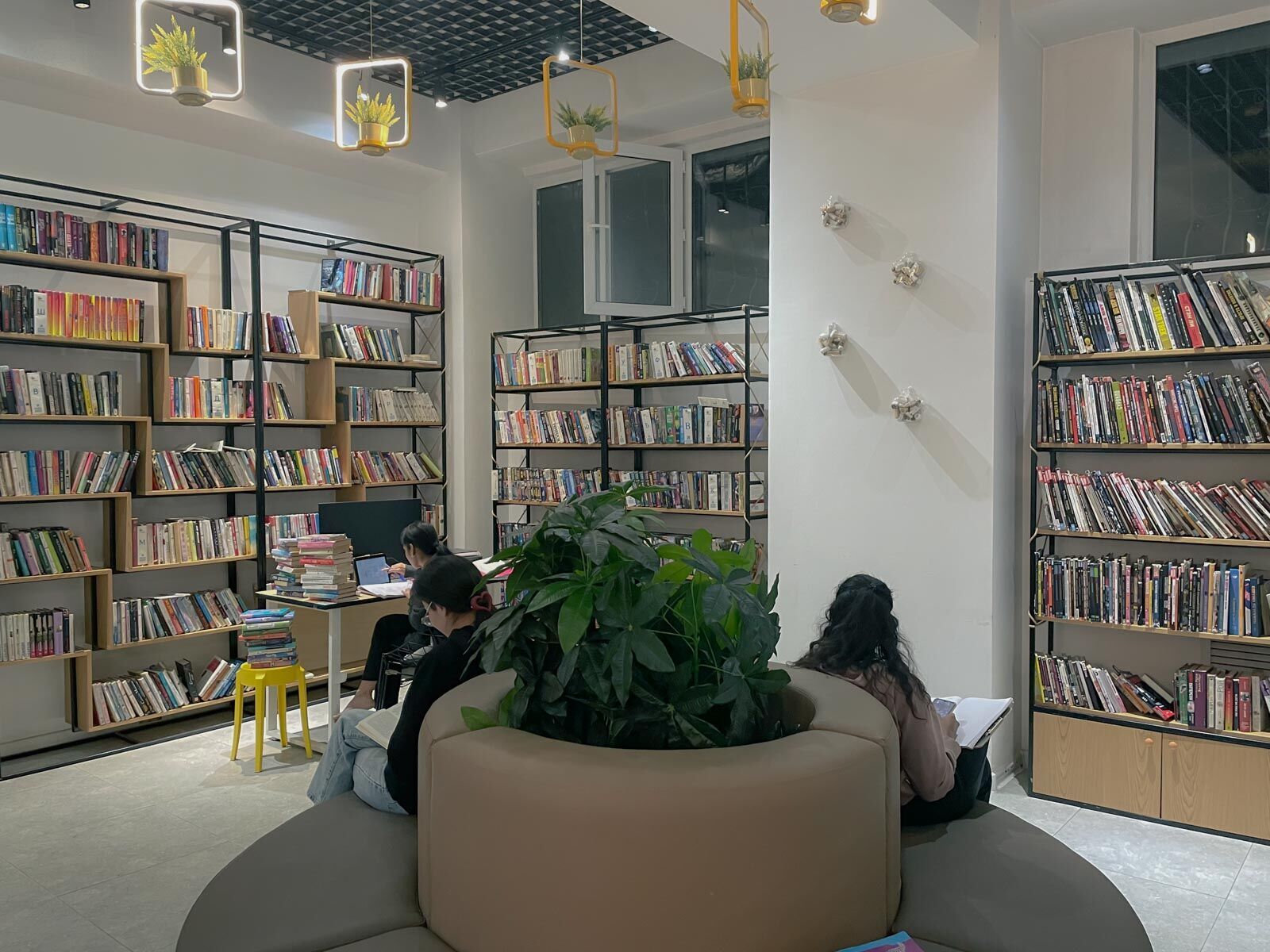
Photo by Daniyar Mussirov.
Transparency
Should applicants disagree with the appeal decisions, the NTC can call for an independent expert review. This year’s panel was formed of specialists from schools, Nazarbayev Intellectual Schools, and Nazarbayev University.
According to the NTC, all disputed questions were subjected to an objective and extensive review, an opinion confirmed by the independent expert panel.
Aqniet Oralgazy took the exam in 2023. She initially chose the humanities track, which entails questions only in history and reading literacy.
Aqniet told Vlast that school teachers pressured her to change her chosen subject. Teachers said that if she refused she would have to leave the school.
“I chose the creative track. My teachers criticized me, saying that I chose ‘the easiest subject,’ and that this would affect the school’s ranking,” she said. “They added that only top universities teach these subjects,” essentially dismissing her abilities.
In the majority of schools in Kazakhstan, the 10th and 11th grades are specialized into one of two specific subject tracks: natural sciences and mathematics or humanities and literature.
This means that the last two years of school are specifically set up to prepare students for specific UNT testing tracks.
Aqniet’s school did not offer the humanities track, so she opted for the natural sciences track at school, but still retained her interest in taking the test in her preferred track.
When she started 11th grade, the teachers contacted her parents and demanded that she switch to the natural sciences testing track.
“I was lucky to have my parents’ support. I almost ended up having to change my future because of pressure from my teachers,” Aqniet told Vlast. Now, she is studying journalism at SDU University in Almaty.
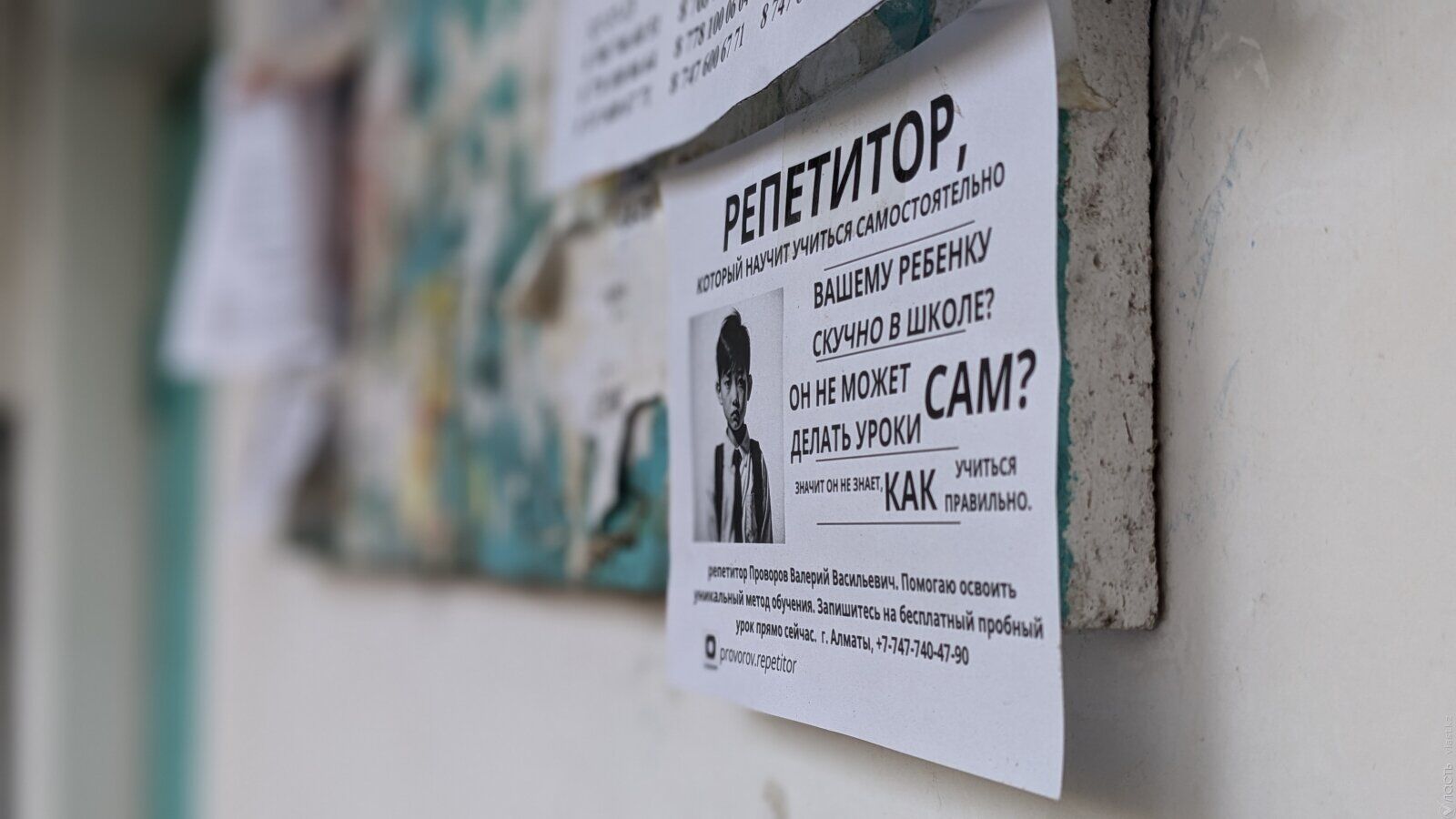
Photo by Svetlana Romashkina.
Academic Pressure
Akzhibek Orazbay took the exam in 2023. She described the experience as one of the most emotionally draining periods of her school years.
For Akzhibek, the pressure was not only academic, but financial and social as well.
“My biggest goal was to earn a state grant so I wouldn’t become a financial burden on my parents.” she told Vlast.
She recalls feeling as if a single test result could ruin her entire future.
“But I also believe that if something comes too easily, you don’t value it as much,” she said.
Despite the pressure, Akzhibek says the process taught her discipline and self-management.
“I started setting goals, making schedules, and sticking to them. And when I finally earned the grant for my chosen major, I understood that all the stress and hard work had been for a reason.”
While she planned to obtain higher than 120/140 in her UNT, her best result was 105, which meant that she had to settle for her second-favorite option at a university in Almaty.
Psychologist Akerke Azilkhan, who works with students preparing for high stakes exams, told Vlast the standardized tests are a taxing experience for teenagers.
“The UNT puts intense pressure on many students because they see it as a gateway to life-changing opportunities,” Azilkhan said. “Seventeen- and eighteen-year-old students often feel that they cannot make any mistakes and that their entire future depends on a single score.”
The last round of UNT testing showed just how crucial it is to surpass the minimum threshold: Only 76% of the test takers obtained results higher than the 50/140 points mark.
Akzhibek studied at a non-specialized secondary school in Merke, a small town in the southern Zhambyl region, and her chosen subjects were World History and Geography.
She worried that the education she was provided with at school would not allow her to get a sufficiently high score on the UNT. So she spent two years preparing for the exam with private tutors, during which time, she said, she felt lost.
“After four years of studying a subject they never felt they had any connection to, university graduates often feel uncertain about their future path.” psychologist Azilkhan said. “Some do not want to work in the profession they studied for, because, leaving school, they chose a major out of pressure rather than genuine motivation.”
According to the psychologist, during this time, external factors also play a major role.
For Aqniet, the pressure she was under while studying for her 2023 test was nearly unbearable. Had she listened to the school teachers urging her to choose another subject, she would not have gotten into the field of her dreams.
Test Prep
Kazakhstani students are increasingly turning to private educational courses to boost their chances of success on the UNT, a trend rooted in concerns over the quality of public schooling, with many parents feeling that schools are not sufficiently focused on academic outcomes.
This trend is especially apparent among families with financial means, who can afford to invest in after-school courses, opening an increasing divide in access to quality education. Experts argue that the growing reliance on private tutoring exacerbates social inequality, as students from wealthier backgrounds are more likely to secure educational advantages, leaving others at a disadvantage.
In mid-November, the Astana and Almaty branches of Tesla Education, a private tutoring company, unexpectedly shut down, leaving hundreds of students without the additional classes they paid for. Some paid up to 1 million tenge ($1,900) for a year’s tuition. Parents said that staff suddenly left work chats, and the offices were locked.
The founder, Aidos Seksenaly, issued a video statement saying that refunds would be provided, but the process would take time. Meanwhile, parents have filed complaints with the police and prosecutors. A news report by 31 Channel in November found that more than 1,000 families could have been affected.
In the absence of improved school infrastructure, the short-term solution will inevitably be to turn to private tutoring. To address this, education sector consultants have emphasized the need for systemic improvements in public education rather than just making private courses more affordable.
“We need to ensure that the free education guaranteed by our Constitution is of the proper quality. Attempts to make [private] courses more accessible are a bandaid on a bigger issue. We need to look at the problem more deeply,” consultant Asel Aulbekova told Vlast last year

Photo by Daniyar Mussirov.
Testing the Tester
In early November, the ministry of science and higher education announced that Educational Testing Service (ETS), the world’s largest private educational testing and assessment organization, will team up with the Kazakhstani government to transform the UNT. The new format will not only evaluate academic achievement but also key skills necessary for success in life and profession.
According to the ministry, the new UNT will also ensure fairness and equal opportunities for all through the introduction of flexible test combinations, along with a unified grading system and equal access regardless of region, school, or language of instruction. The next rounds of UNT will still be held with the same methodology, the ministry said.
In September, Majilis deputy Askhat Aimagambetov, who previously served as a minister of education, had proposed amendments to the UNT.
“The UNT needs to change,” the deputy said during a hearing with the ministry of education, while raising concerns about the influence that the widespread use of AI in the schooling system could have in the preparation and testing of students.
Still, it remains unclear whether the new testing system will decrease pressure on the students stemming from both the grading system and their school teachers. Ultimately, because their future career will be steered by these test results one way or another, the UNT will likely continue to take a toll on the students’ mental health.
More than anything else, students just want support to reach their dreams.
“It was more important for the school system to have more students choose prestigious subjects and obtain higher UNT scores than to help students meet their personal goals. This hurts,” said Aqniet.
Поддержите журналистику, которой доверяют.